Start Leading The AI Transformation in Your Company
AI leadership program: A one-day course for senior life science professionals
on 19th November at House of BioHealth, Luxembourg

79%
of healthcare and life sciences organizations reported that governance and compliance issues have slowed their AI deployments.
Source: Modus Research
70%
life sciences leaders said they had experienced at least one AI pilot failure caused by workflow misalignment, weak endpoints, or data gaps.
Source: Black Book Research
Practical information
The day at a glance: everything you need to know about the training, in one place.
Date
Thursday 19 November 2026
Time
08:30–17:00, followed by networking drinks
Location
House of BioHealth, 27 Rue Henri Koch, 4354 Esch-sur-Alzette, Luxembourg
Format
Open training, in person. Up to 15 participants, so every question gets answered. Taught in English
Price
€800 per person (excl. VAT). Hive members get 20% off (€640).
Included
Lunch, coffee breaks, and networking drinks
What you take back to your team
The AI leadership program gives senior life sciences professionals four things to act on the next day, in one day. We work with the tools your organisation already uses, such as Claude, ChatGPT, and Copilot, so none of it depends on buying new software.
Learning objective
The current state of AI in life sciences
Gain an understanding of the latest developments in Generative AI and how emerging AI technologies, tools, and applications are transforming life sciences organizations. Discover where AI is creating value across R&D, clinical development, medical affairs, quality, and commercial functions.
Frameworks for successful AI adoption
Learn proven frameworks and best practices for implementing AI successfully within your organization. Explore approaches for driving adoption, aligning stakeholders, managing change, and scaling AI initiatives to deliver measurable business value.
AI governance, compliance, and risk management
Understand how AI governance, data protection, and compliance requirements should be managed in a regulated environment. Gain practical insights into AI governance frameworks, data security, risk management, and the implications of the EU AI Act and GDPR for life sciences organizations.
Practical AI tools and workflows for immediate impact
Explore practical AI tools, use cases, and workflows that can be applied immediately in your daily work. Learn how leading organizations are leveraging AI to increase productivity, improve decision-making, and accelerate value realization across teams.
You'll go home knowing what AI means for your organisation, which capabilities your team needs to build, and how to lead the change without compromising compliance or quality. The day ends with networking drinks, among peers facing the same questions.
We work with the tools you already use.

Agenda
One day, from first questions to a plan you can take back to your team.
08:30 · Walk-in and coffee
09:00–10:45
AI in life sciences today
- Generative AI, Copilot, and AI agents explained
- Where AI is applied across life sciences organisations
- The trends shaping adoption
10:45 · Coffee break
11:15–12:30
Successful AI adoption
- Building an AI strategy that delivers value
- Driving adoption and engaging stakeholders
- Lessons from implementations that worked and ones that didn't
12:30 · Lunch
13:30–15:00
AI governance, compliance, and risk
- Governance fundamentals for life sciences
- Data protection, privacy, and security
- What GDPR and the EU AI Act mean for you
15:00 · Coffee break
15:15–16:45
Practical AI tools and workflows
- AI tools for productivity and knowledge work
- Use cases across life sciences functions
- Developing your organisation's AI adoption roadmap
16:45 · Closing remarks
17:00 · Networking drinks
Your trainers
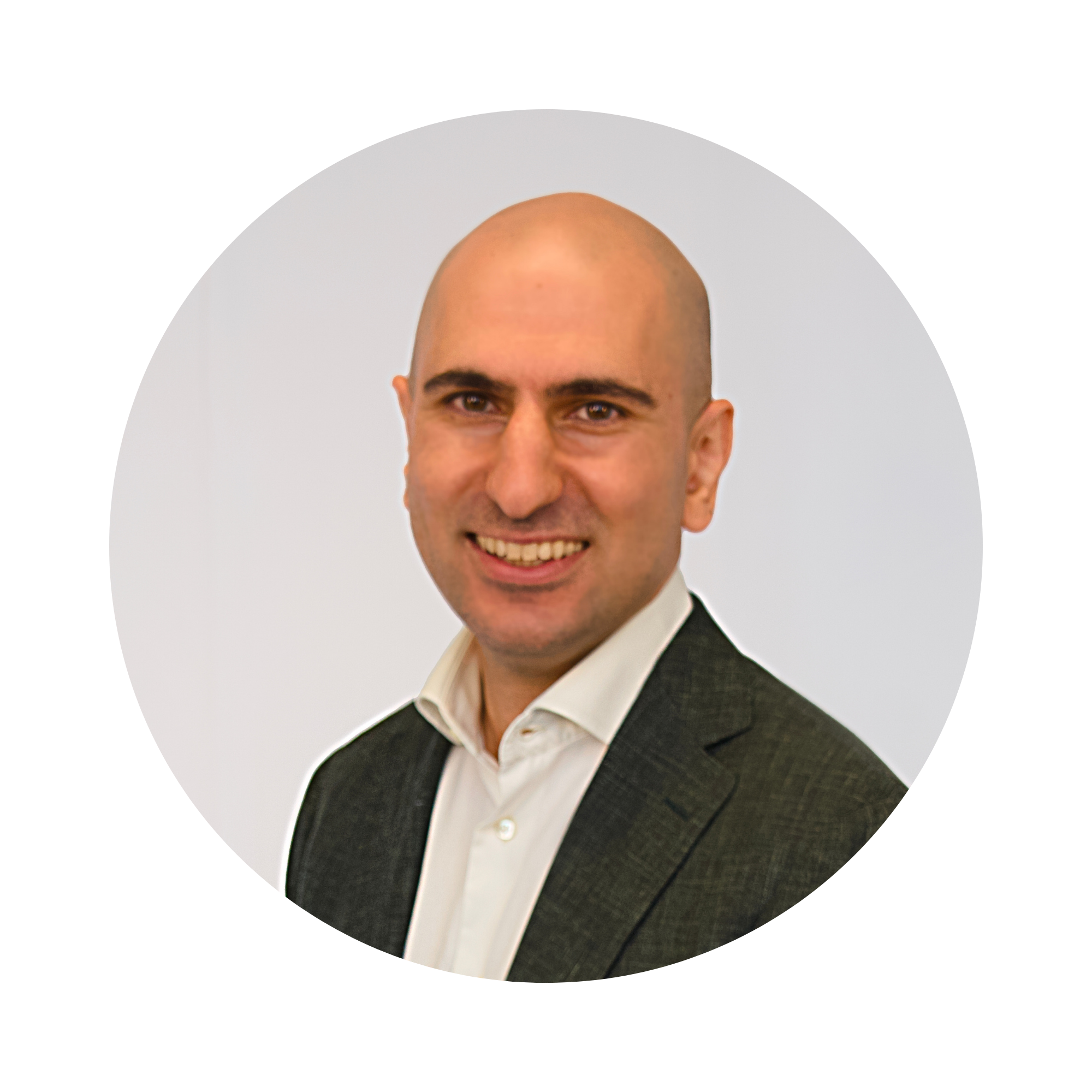
Rizgar has spent fifteen years in life sciences consultancy, guiding companies through digital transformation and operational challenges, watching first-hand how AI has reshaped the industry. As operations director at a major life sciences consultancy, he has implemented AI projects with Claude, ChatGPT and Copilot. He teaches from what he has built, not from the manual: participants leave knowing what these tools do in a real organisation, and what it takes to make them stick.
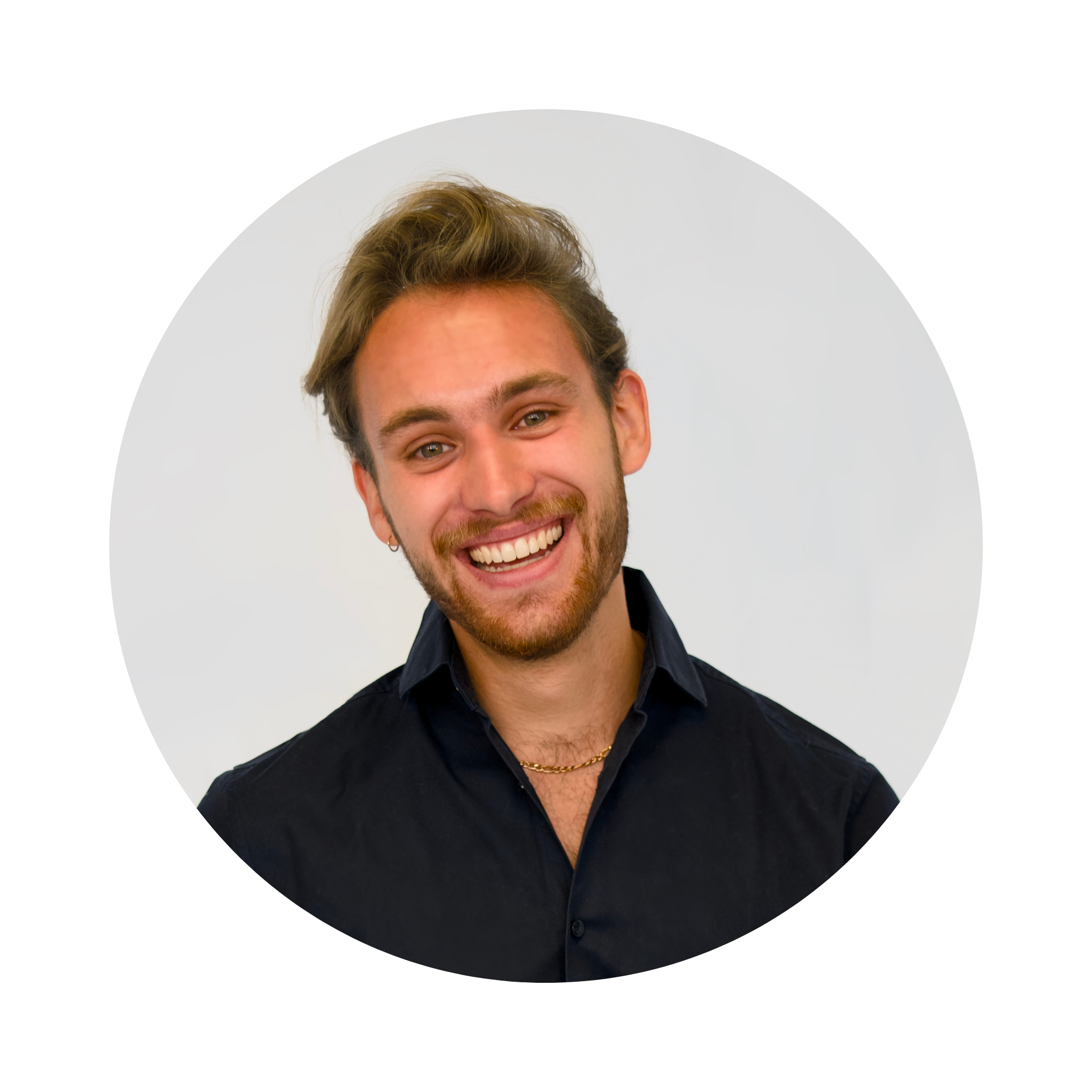
Sven has trained and coached life sciences teams on AI decision-making, moving them from uncertainty to confident, compliant daily use. With a background in chemistry and business consulting, he understands both the science and the commercial pressure his participants work under. He doesn't teach AI in theory: teams leave knowing which tools to trust, when not to trust them, and how to document what AI contributed, so the answer is ready before the auditor asks.
Trusted by life sciences organisations across Europe

Why does AI implementation stall in life sciences?
Only 22% of life sciences leaders say they've successfully scaled AI, and just 14% have fully integrated it into daily workflows (Deloitte, 2026 Life Sciences Outlook). Access isn't the issue. Your team probably already has Claude, ChatGPT, or Copilot within reach. What's missing is a shared way to use them, so AI stays a personal habit of a few colleagues instead of becoming team practice.
Why do so few life sciences teams see a return on AI?
Just 9% of life sciences leaders report significant returns on their AI efforts (Deloitte, 2026 Life Sciences Outlook). The technology is rarely the reason. Across industries, around 70% of AI implementation challenges come down to people and processes, and only 10% to the algorithms (BCG, Where's the Value in AI?, 2024).
Sources: Deloitte, 2026 Life Sciences Outlook · BCG, Where's the Value in AI?, 2024
Frequently asked questions
Do I need a technical background to join?
No. BioGuild's AI leadership program is built for senior life sciences professionals, project leads, and department managers, not data scientists. The day starts with what generative AI, Copilot, and AI agents can realistically do today, then moves on to adoption, governance, and practical workflows. You bring your knowledge of your organisation; we bring the AI side.
Does this program count toward the EU AI Act's AI literacy requirement?
It supports it. Article 4 of the EU AI Act, which has applied since February 2025 and was amended in July 2026, requires organisations that use AI to take measures supporting AI literacy. The law doesn't prescribe a specific training or certificate. The program covers what the EU AI Act and GDPR mean for life sciences organisations. It also gives you, as a leader, the grounding to set up literacy measures for your own team.
Which AI tools does the program cover?
The ones your organisation already uses. BioGuild is tool-agnostic: the program works with Claude, ChatGPT, and Copilot, and looks at where AI agents fit in. Nothing in it depends on buying new software.
Why a program specifically for life sciences?
In life sciences, the hard part of AI isn't the tool. It's the context: regulated work, sensitive clinical and patient data, and documentation that QA and inspectors will review. BioGuild's trainers are AI practitioners with life sciences roots. The program's use cases come from R&D, clinical development, medical affairs, quality, and commercial functions, not generic office work.
Can we run this program in-house for our own team?
Yes. Besides this open training, BioGuild runs private trainings for up to 18 participants. They're tailored in format, topics, and length, and delivered in-house or at a partner location. Email team@bioguild.org to discuss what your team needs.
Become a leader in the AI transition in life science
Tell us what your team needs and we'll suggest the right training and format.
Sven Joziasse
In-house trainer BioGuild
- team@bioguild.org
- Vening Meinesz building C, Princetonlaan 6, 3584 CB Utrecht, the Netherlands